Steetz Mailing List
Stay connected with our mailing list to get notified about sales, special offers, new products and business updates!



Produce standing seam panels around your own projects and production schedule. Shop professional roll forming machines and profiling machines for workshop and jobsite use, with options for mobile profiling, automated production, specialist panel shapes and curved standing seam work.
The right roll forming machine gives you greater control over where and when your panels are produced.
Profile long panels directly on site, increase workshop output or add greater automation depending on how your business operates.
Choose around the metals, panel dimensions and production volumes you regularly handle. Machine weight, working width, profiling speed, setup, automation and specialist capabilities can all determine which roll forming machinery makes sense for your operation.
Not every profiling machine is designed for the same workflow. Start with what you need the machine to do most often.
|
What’s your priority |
Profiling machine to consider |
Why consider it? |
|
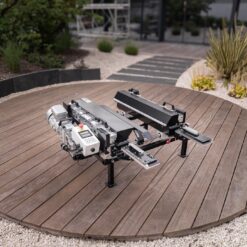
Producing long panels directly on site |
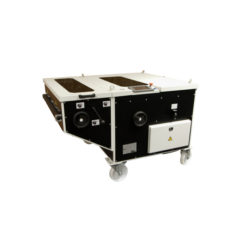
A 160 kg mobile machine with wheels and a retractable handle, designed to produce unlimited panel lengths directly on the roof. |
|
|
Flexible roofing and cladding production |
Profiles at up to 16 m/min and supports different male, female and rolled-edge configurations. |
|
|
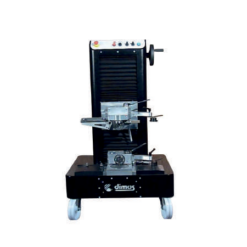
Combining mobility with production capability |
Offers wheeled mobility, tool-free setup, automatic roller adjustment and profiling speeds up to 15 m/min. |
|
|
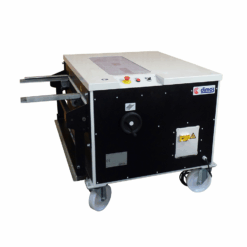
Automating repeat panel production |
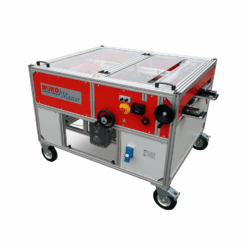
Adds touchscreen controls, programmable production, automatic roller adjustment and motorized longitudinal and cross cutting. |
|
|
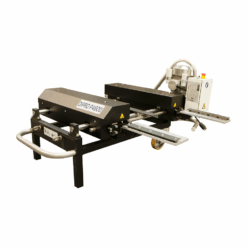
Producing specialist panel shapes |
Offers variable profiling speed and support for short, tapered, convex and concave panels. |
|
|
Curving standing seam panels |
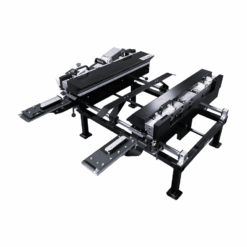
Dedicated machinery for repeatable curving of 1″/25 mm standing seam panels. |
These rollform machines are designed around 1″/25 mm standing seam work, but working widths, material capacities and production features differ by model. Check the individual specifications before ordering.
A profiling machine should fit the work you already produce and the projects you want to take on next.
For regular jobsite use, consider machine weight, transport, power requirements and setup. Workshop production may place greater value on speed and automation.
Confirm the required panel widths, profiles, metals and material thicknesses. Capacity can vary depending on both the machine and the material being processed.
For frequent repeat runs, programmable controls, automatic adjustments and integrated cutting can improve production efficiency. For smaller or more varied projects, mobility and straightforward setup may matter more.
Curved, tapered, convex or concave work can require capabilities beyond standard straight standing seam profiling.
A roll forming machine is a significant investment, so choosing on specifications alone is not always enough.
Steetz supplies Dimos and Wuko machinery backed by hands-on architectural sheet metal experience.
Founder Peter Steetz trained in traditional sheet metal and roofing techniques in Germany and has worked professionally with copper, zinc and slate since 1986.
If you are comparing machines, contact Steetz with the metals, panel sizes and type of production you need. We can help you identify which machine best fits your operation before you order.
We provide technical support for machinery purchased through the company, with help available by phone, video call, text or email.
We can help with applicable manufacturer warranty claims. As an authorized dealer and service center for the brands it sells, Steetz can support you through the warranty process.
Yes, financing is available for selected profiling machines. Check the individual product page or contact us to discuss the options available for the machine you are considering.
Yes, it can. Producing panels in-house can reduce your reliance on externally fabricated panels and give you greater control over production costs, depending on your materials, volume and current supplier costs.