
There is a tradition in the German-speaking trades that most people outside Europe have never encountered. It is older than most of the buildings still standing in North America, and it shaped the way an entire continent thinks about what it means to master a craft. It also happens to be the tradition that brought Steetz into existence.
Understanding it explains a lot about why we do things the way we do.
Apprentice, Journeyman, Master
The German trade system is built on three stages, and each one is earned rather than awarded.
An apprentice begins by binding themselves to a master craftsman – learning not just technique but the reasoning behind it. Why a particular seam is formed a certain way. Why one material behaves differently from another at a specific temperature. Why the tool in your hand was designed with this handle angle and not another. The apprenticeship is not simply training. It is immersion.
In the old tradition, the apprentice often lived with the master’s household, compensation paid in food, lodging and knowledge rather than wages. In many cases the apprentice’s family paid for the privilege of the placement. The expectation was not convenience – it was formation.
When the apprenticeship was complete, the newly qualified craftsman faced a decision that separated the serious from the merely adequate. Rather than settling immediately into a workshop and calling themselves skilled, the trade guilds required something more demanding. They called it the Wanderjahre – the journeyman years.
The Wanderjahre — Years of Deliberate Travel
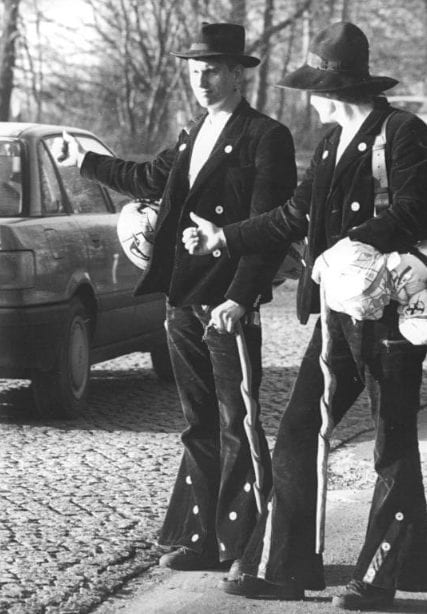
The Wanderjahre was not a gap year. It was a structured period, typically lasting three years and a day, during which the journeyman was required to travel – moving from town to town, workshop to workshop, working under different masters and absorbing different methods. The rules were strict. The journeyman could not return to their home town during this period. They could not work for the same master twice. The point was exposure – to different techniques, different regional traditions, different problems requiring different solutions.
The journeyman carried everything they owned. Their tools. A leather pack called the Felleisen. And a uniform that was immediately recognizable to anyone who knew what they were looking at.
The Dress of the Journeyman
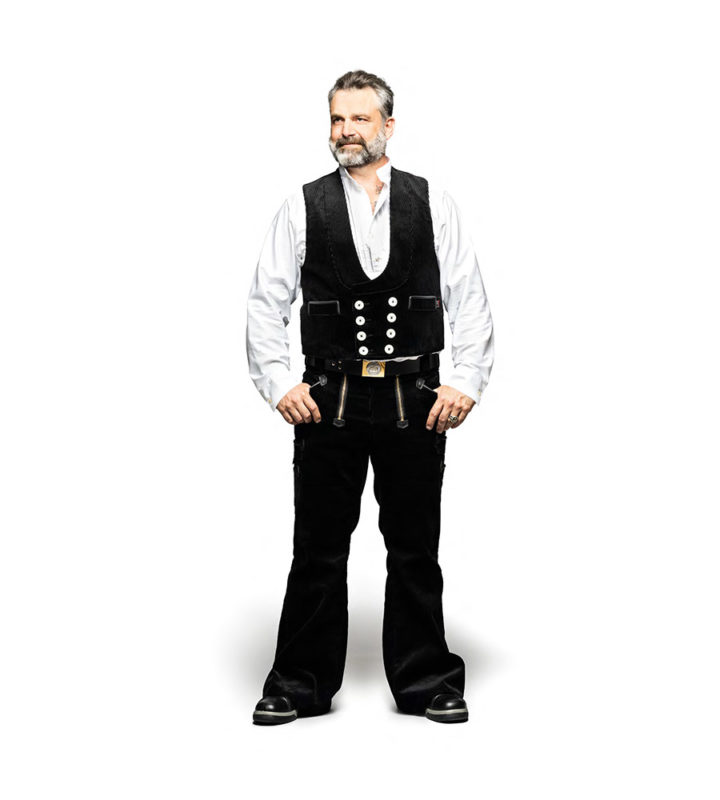
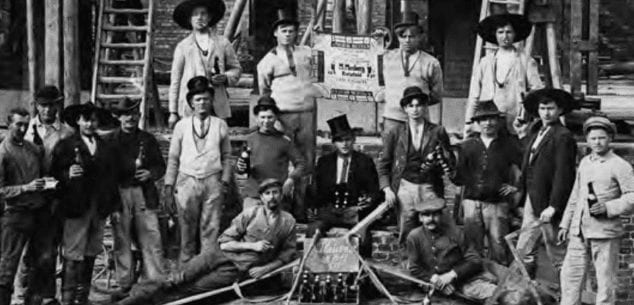
The traditional journeyman dress varied slightly by trade but followed a consistent logic. Dark guild trousers – typically bell-bottomed, in black or cord. A waistcoat. A wide-brimmed hat or, in some trades, a stovepipe hat. A carved hiking staff called the Stenz, which is a traditional curled hiking pole. The journeyman carries his belongings in a leather backpack called the “Felleisen”. In medieval times many towns banned these leather bags as they often carried insects and fleas with them which prompted many journeymen to switch over to a coarse cloth to wrap and carry their belongings. Every element had a purpose.
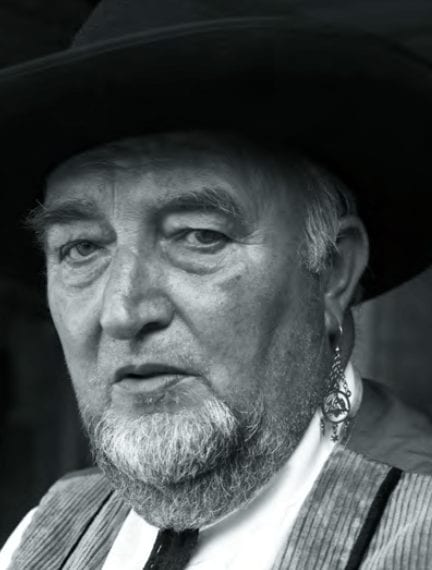
The gold earring and gold bracelet were more than appearance. In the event of death on the road – not uncommon for a young man travelling alone across Europe – the gold could be sold to cover the cost of burial. It was practical thinking dressed as tradition, which is a reasonable description of the German trade mentality in general.
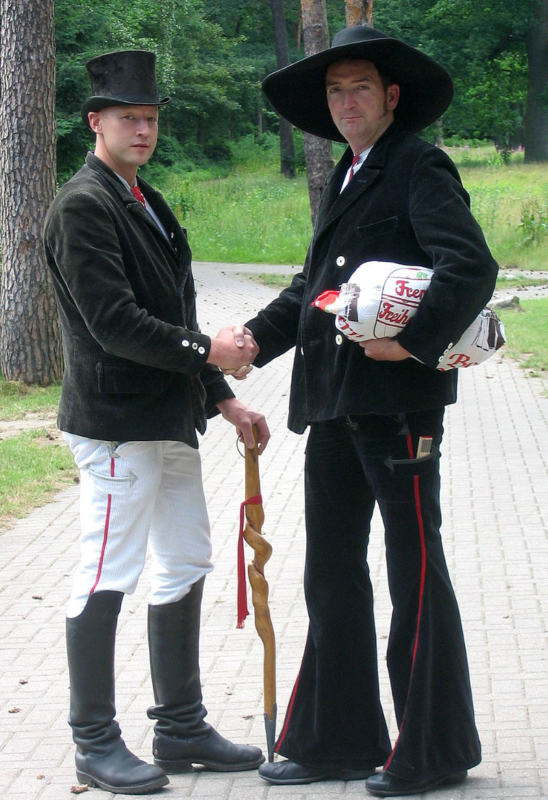
You can still encounter journeymen dressed this way in Germany today, though it is increasingly rare. When you do, you are looking at an unbroken line of tradition stretching back to medieval trade guilds – craftsmen who chose to mark themselves as people who took the work seriously enough to do it properly.
Becoming a Master
After completing the Wanderjahre, the craftsman returned and was eligible to register with a guild. After further years working within that guild’s system, they were permitted to undertake what the Germans call the Meisterstück – the masterpiece.
The Meisterstück was not a simple test. It was a single piece of work, designed and executed by the craftsman alone, submitted to the guild masters for judgment. It had to demonstrate not just technical competence but genuine mastery – problem-solving, originality, and a command of the trade’s full range of methods. If the guild masters approved it, the craftsman was elevated to Meister – master – and earned the right to open their own workshop and take on apprentices of their own.
The cycle then began again.
Why This Matters for the Work We Do
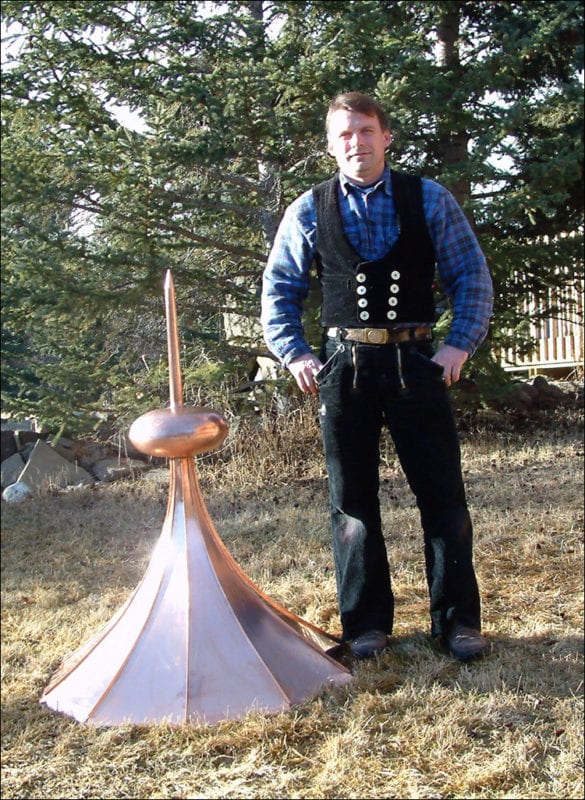
Peter Steetz went through this system. Trained in Germany in the traditional sheet metal and architectural roofing trades, he worked with copper, zinc and slate using the methods and tools that European craftsmen have refined over centuries. In 1986 he began working professionally with these techniques. In 2004 he brought that knowledge to Canada, expanding Steetz Copper Craft into Steetz Tools – becoming a supplier of the very same European tools he had been using on his own projects for nearly two decades.
The journeyman tradition is directly relevant to what Steetz carries and why. When you are working at the level of a custom copper roof or a hand-formed zinc turret on a heritage restoration, the difference between a tool built to European trade standards and one built to a price point is not academic. It shows in the seam. It shows in the finish. It shows in how the tool behaves after ten years of daily use.
The craftspeople who trained in this system developed an unforgiving standard for their equipment because the work demanded it. That standard is what Steetz sources and supplies – from Stubai in Austria, from Wuko, from Buschmann, from Freund. Every manufacturer in the Steetz catalogue comes from the same culture of making things properly and building tools that professionals will still be reaching for twenty years from now.

The Guild Clothing Tradition
One visible remnant of the journeyman tradition that has found an appreciative audience well beyond Germany is the guild workwear. The functional, durable clothing designed for the German trades – the moleskin work trousers, the carpenter’s pants, the robust jackets built for outdoor and site work – carries the same philosophy as the tools. Made properly, from the right materials, to last.
Steetz carries the full FHB workwear range, manufactured in Germany and designed directly from the guild clothing tradition. FHB has been making trade clothing in Germany since 1892. The cut, the fabric weight, the reinforcing at stress points – none of it is accidental.
Shop FHB WorkwearThe Tradition Behind the Tools
Every tool in the Steetz catalogue comes from the same cultural context as the journeyman tradition – European manufacturers who built their reputation supplying craftsmen trained to notice the difference between good and exceptional.
Stubai has been making tools in the Austrian Alps since 1897. Wuko benders are used by professional roofers and sheet metal workers across North America because the geometry is precise enough to satisfy craftsmen who were trained to reject anything less. Buschmann seamers are found in workshops run by people who learned their trade the same way Peter did – through years of deliberate practice under people who would not accept sloppiness.
That lineage is what Steetz carries into Canada and the United States. Not the cheapest way to do the job. The right way.
Check out this video about the Journeyman journey!
Here at Steetz we carry a large line of traditional guild clothing for both men and women which is expertly design and crafted by FHB in Germany.
Learn more about FHB here!